International Baccalaureate Diploma Programme

IB Logo

5000+

IB world schools

150+

Countries

21.4%

Higher Ivy League acceptance

2000+

Recognized universities

5000+

IB world schools

500+

Countries

21.4%

Higher Ivy League acceptance

2000+

Recognized universities

About the IBDP

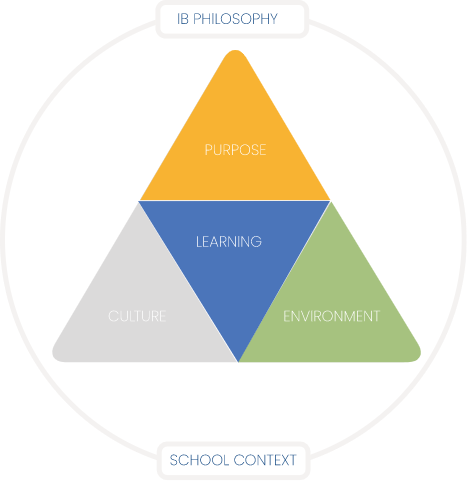
IBDP stands for the International Baccalaureate Diploma Programme, a two-year curriculum for students recognized by universities worldwide. It is a rigorous and comprehensive program that emphasizes critical thinking, global awareness, and holistic development, requiring students to study a range of subjects, complete a theory of knowledge course, write a research paper, and participate in creative, activity, and service (CAS) projects.
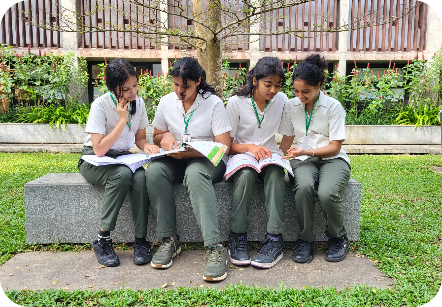
  • Age: 16-19 Years
  • Grade: 11 & 12
  • Duration: 2 Years

Learner Profile

CAS

CREATIVITY, ACTIVITY, SERVICE

CAS involves activities and projects across creativity, activity, and service strands, fostering personal growth, collaboration, and reflective learning.
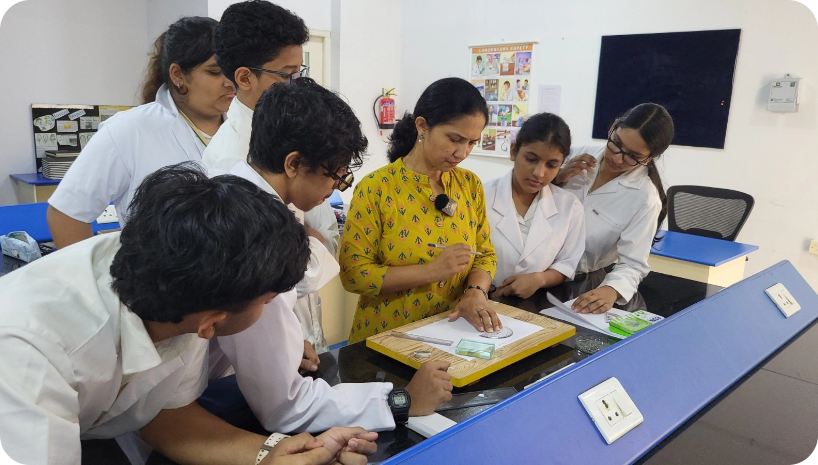
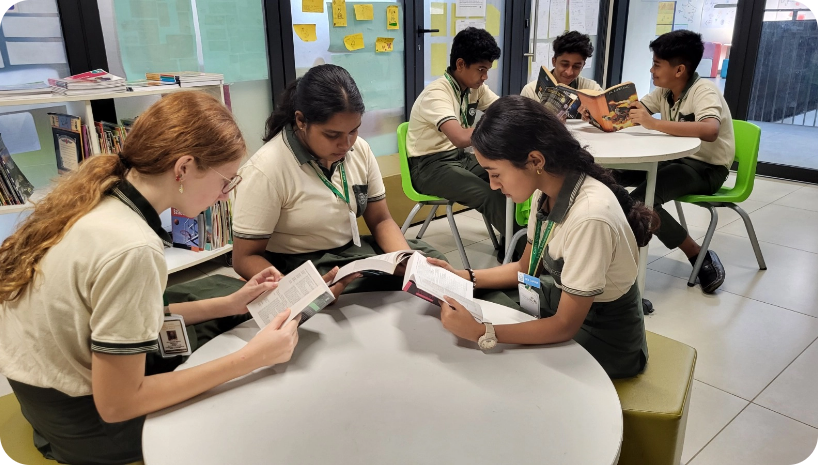
  • CAS is one of the three mandatory core elements of the DP.
  • Students engage in creative, physical, and service-oriented experiences and reflect on learning outcomes.
  • CAS does not contribute points toward the diploma but is mandatory for successful completion.

TOK

THEORY OF KNOWLEDGE

TOK develops critical thinking about knowledge and connects learning across disciplines.

  • TOK is a mandatory core part of the Diploma Programme.
  • It asks students to reflect on the nature of knowledge and ‘how we know what we claim to know’.
  • TOK is assessed through an exhibition and essay and contributes to core points in the diploma.

EE

EXTENDED ESSAY

The Extended Essay develops university-level research, writing, and critical thinking skills.
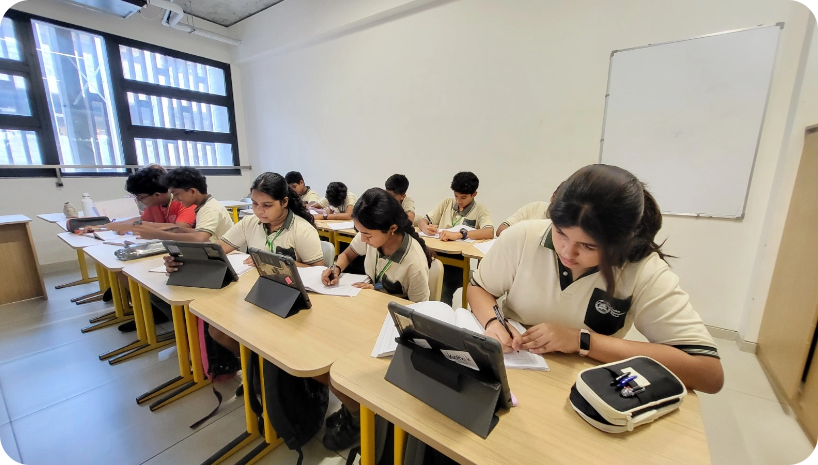
  • The Extended Essay is a mandatory component of the DP core.
  • It is an independent, self-directed research project culminating in a 4,000-word academic essay.
  • Students conduct in-depth research on a topic linked to one of their Diploma subjects or an interdisciplinary world studies topic
  • EE and TOK together can contribute up to 3 points toward the diploma.

Subject Choices

*ESS- It is an interdisciplinary subject offered in both the humanities and the sciences.

10 Reasons to choose IBDP

1
It increases academic opportunity
The IB DP is recognized around the world, and its rigorous academic standards open doors to top universities.
2
IB students care about more than just results
The IB develops well-rounded learners who value community, service, and personal growth — not just academic scores.
3
It encourages you to become a confident and independent learner
DP students learn how to study independently, think for themselves, and take responsibility for their own learning.
4
It’s an international qualification
The IB Diploma is accepted globally, providing mobility, flexibility, and opportunities for international study.
5
Graduates are globally minded
Students develop intercultural understanding and become aware of global issues, preparing them to engage with the wider world.
6
The IB encourages critical thinking
DP subjects are designed to help students analyze, evaluate, and think deeply — skills essential for university success.
7
DP students have proven time management skills
The programme teaches students how to manage deadlines, prioritize tasks, and balance academic and extracurricular commitments.
8
It assesses more than examination techniques
The DP uses coursework, projects, presentations, and research — not just final exams — giving students a broader chance to demonstrate their abilities.
9
Subjects are not taught in isolation
The IB encourages connections across subjects through Theory of Knowledge (TOK), CAS, and extended essay research.
10
It encourages breadth and depth of learning
DP students study a broad curriculum while also exploring subjects in depth, ensuring both specialization and a strong overall foundation.

FAQs

What is the IB Diploma Programme (DP)

The IB DP is a rigorous, internationally recognized two-year pre-university programme for students aged 16–19 equivalent to grade 11 and 12. It aims to develop knowledgeable, principled, open-minded, and critical thinkers prepared for global education pathways.

Why choose the IB DP?

The DP offers:

  • Strong academic depth and breadth
  • Development of critical thinking, communication, and research skills
  • Subject choices
  • High acceptance rates at universities worldwide

What type of student is best suited for IB DP?

A student who is:

  • Curious and open-minded
  • Willing to think critically
  • Ready to work independently
  • Interested in global perspectives
  • Eager to balance academics with CAS

Why do universities value IB students?

IB students are known for:

  • Research skills
  • Strong writing
  • Critical thinking
  • Independence
  • Global awareness
  • Ability to handle multiple assessments

This makes them highly prepared for university life.

How is the DP curriculum structured?

Students study:

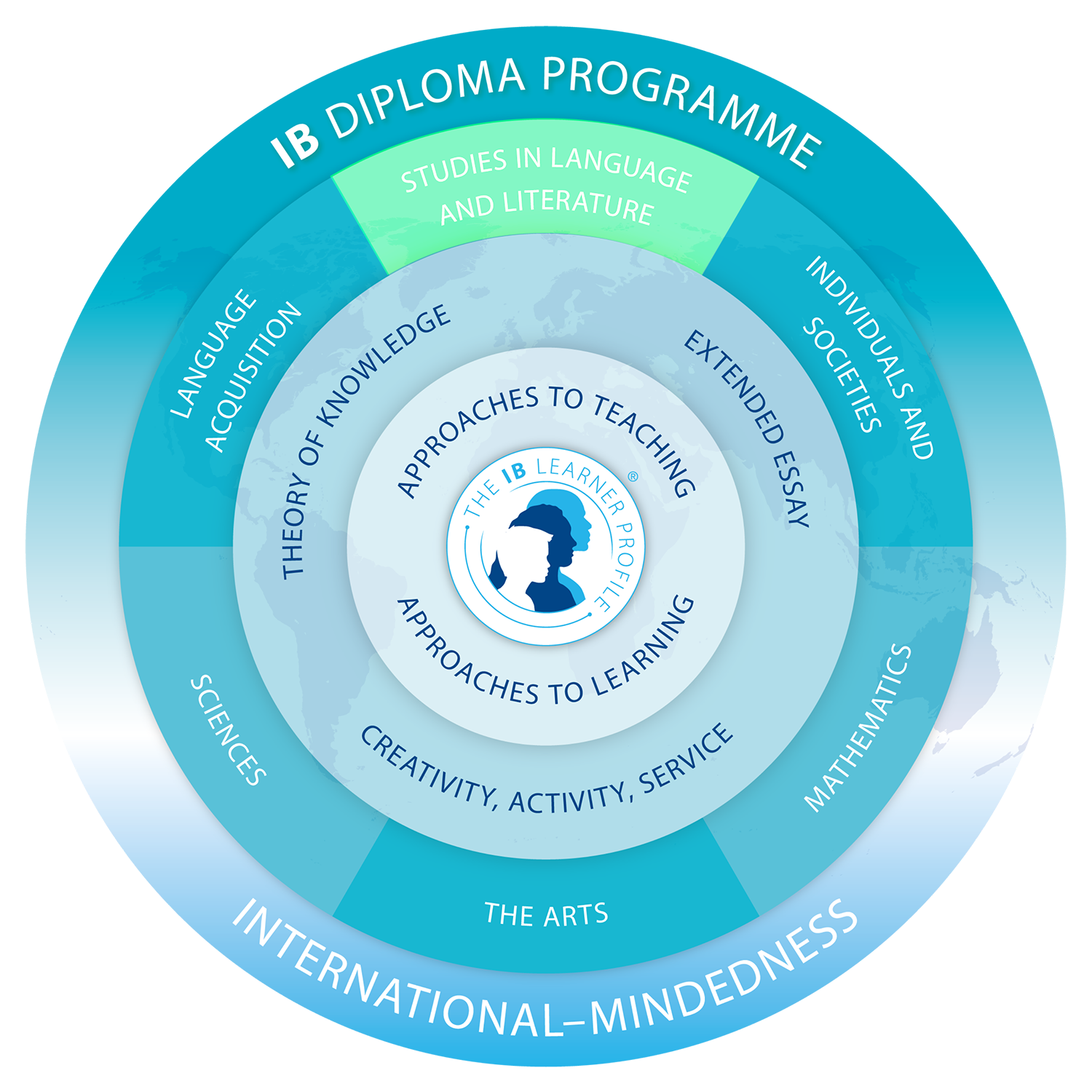
  • Six subjects (one from each group)
  • Three core components:
    TOK (Theory of Knowledge)
    CAS (Creativity, Activity, Service)
    EE (Extended Essay)
    This creates a balanced yet challenging programme.

What subjects are available in the DP?

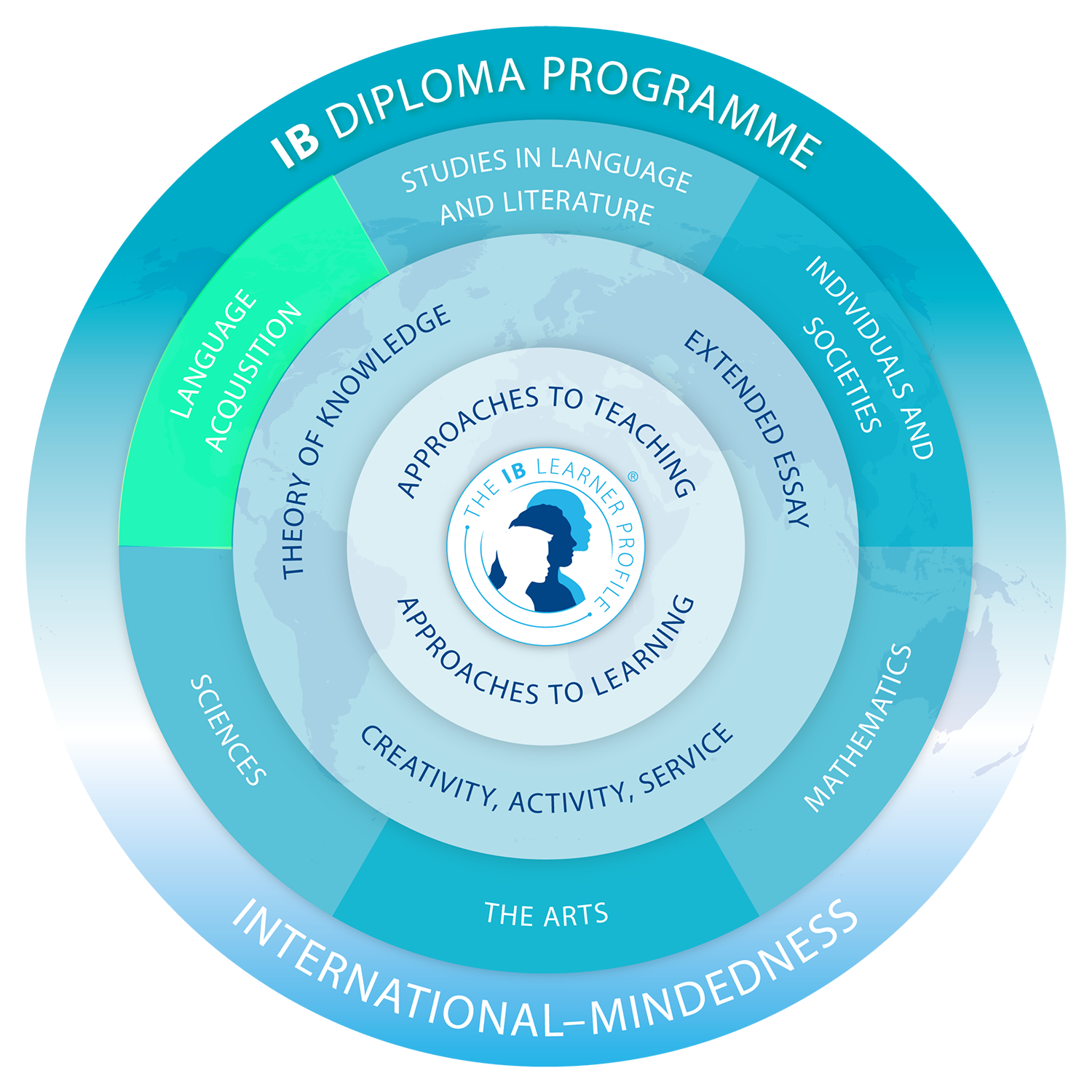
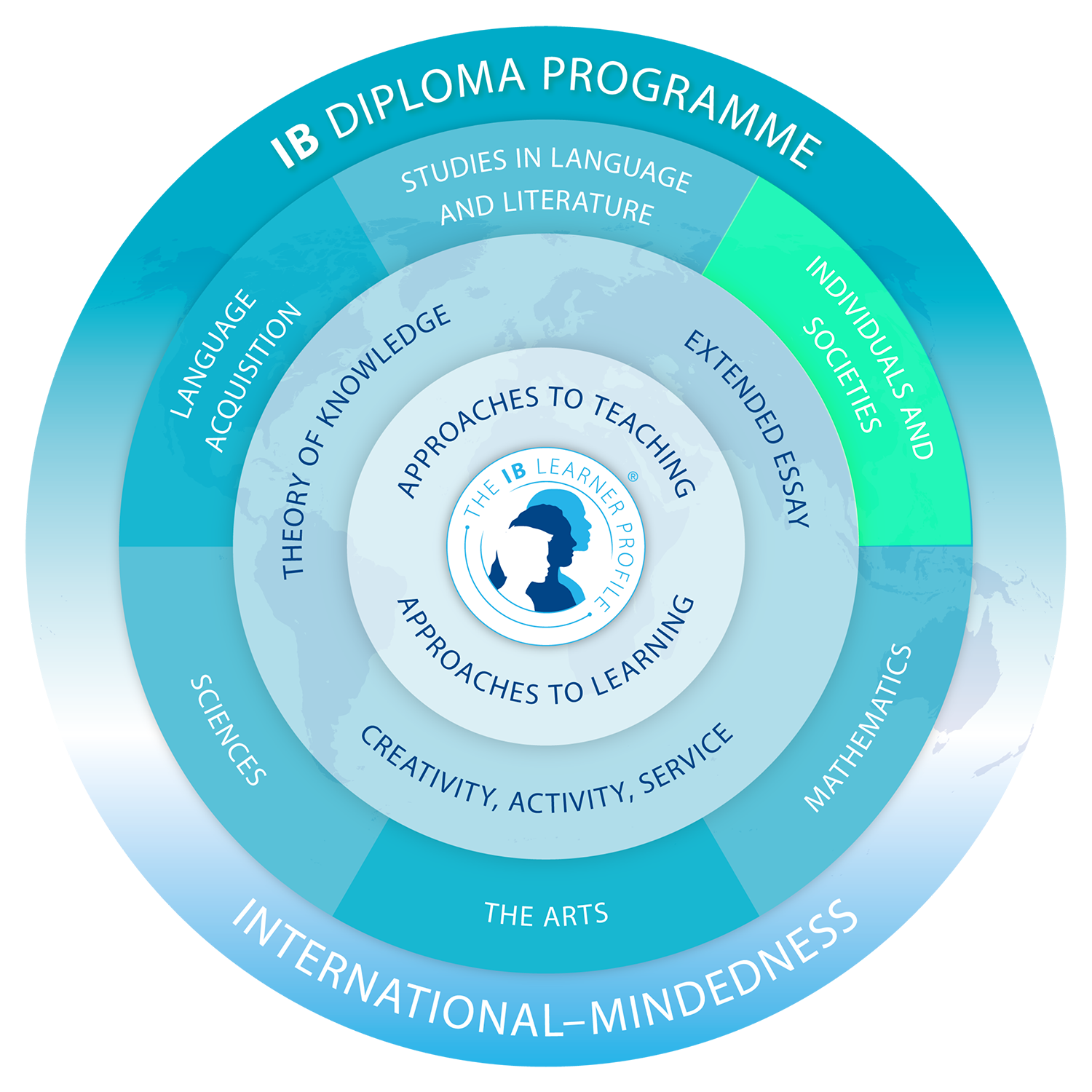
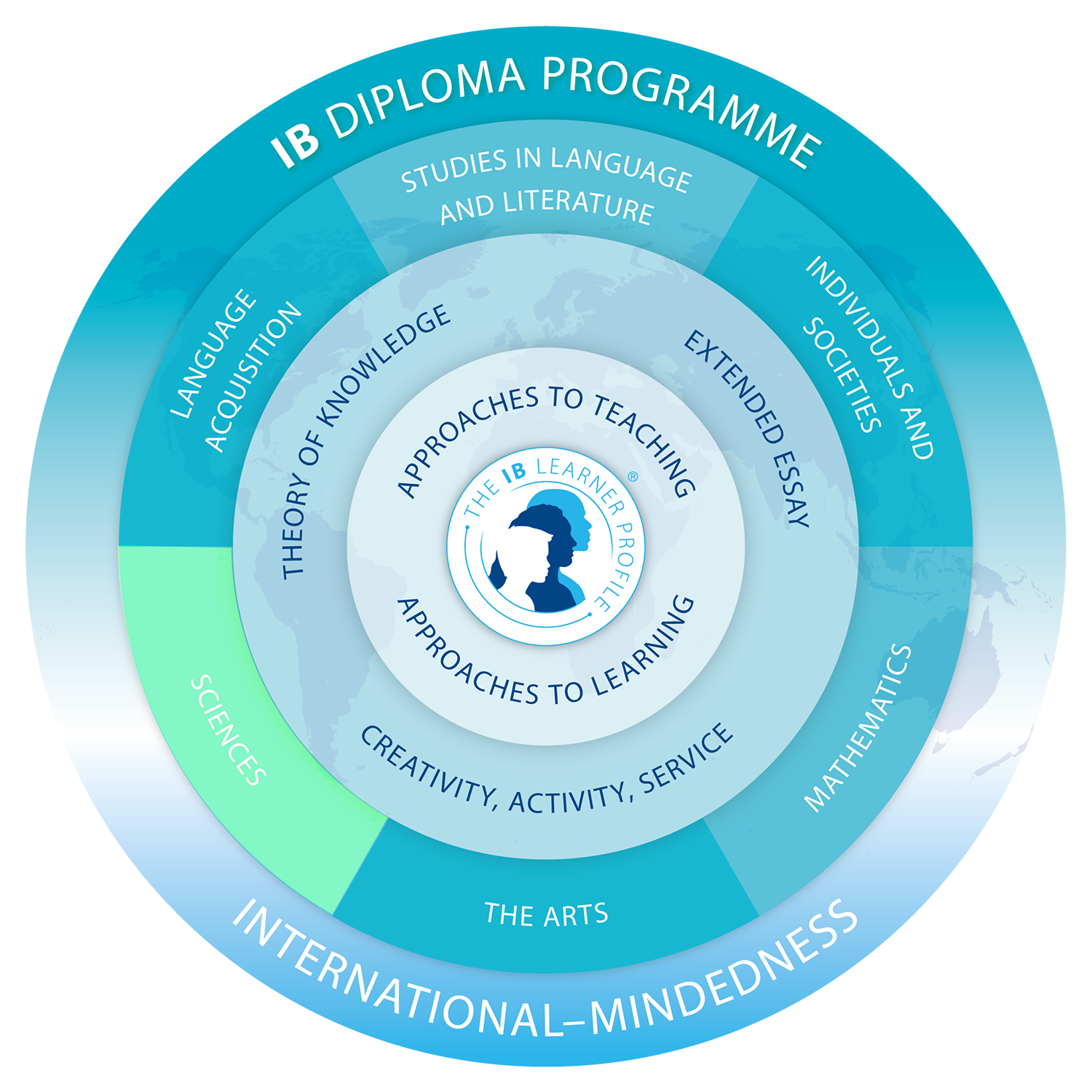
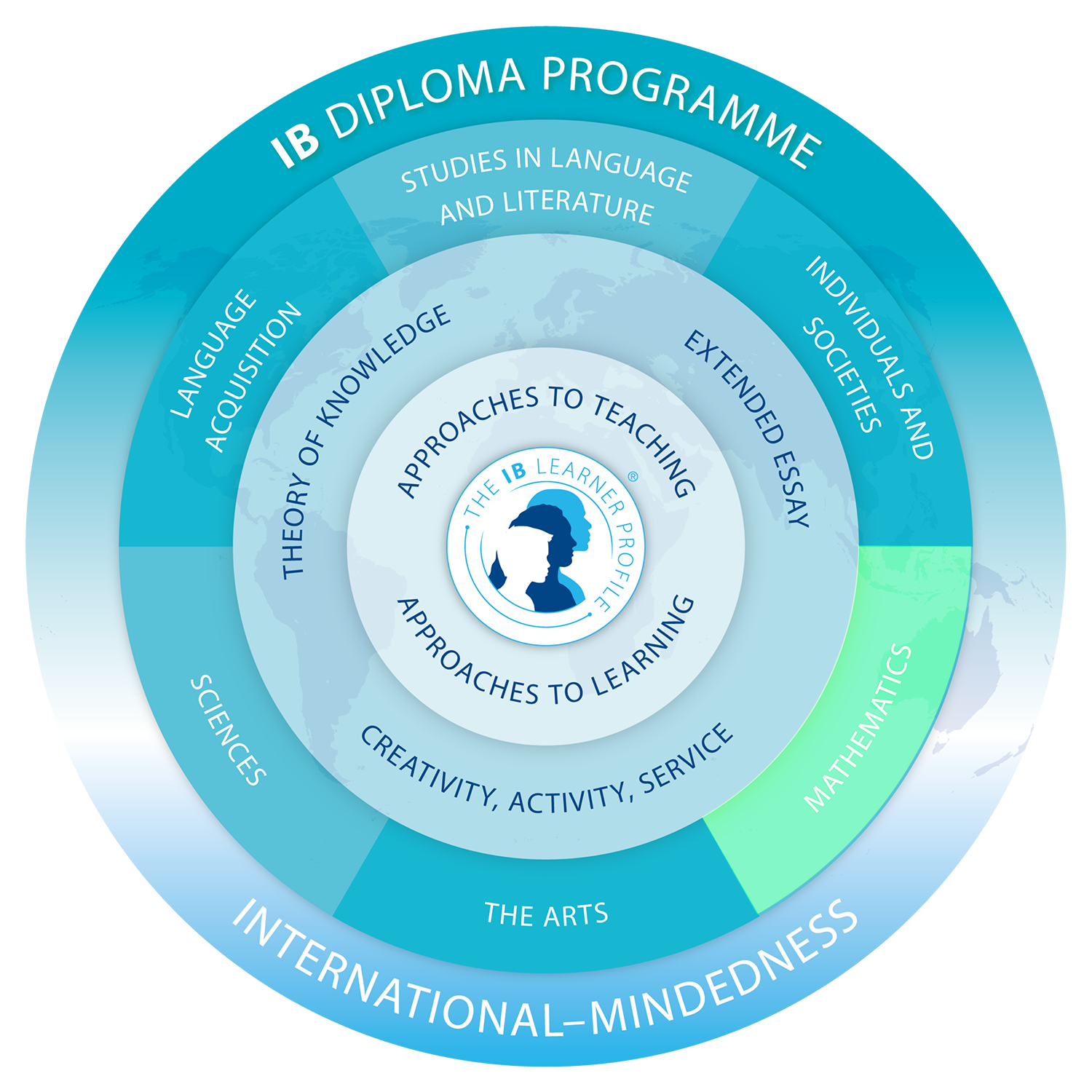
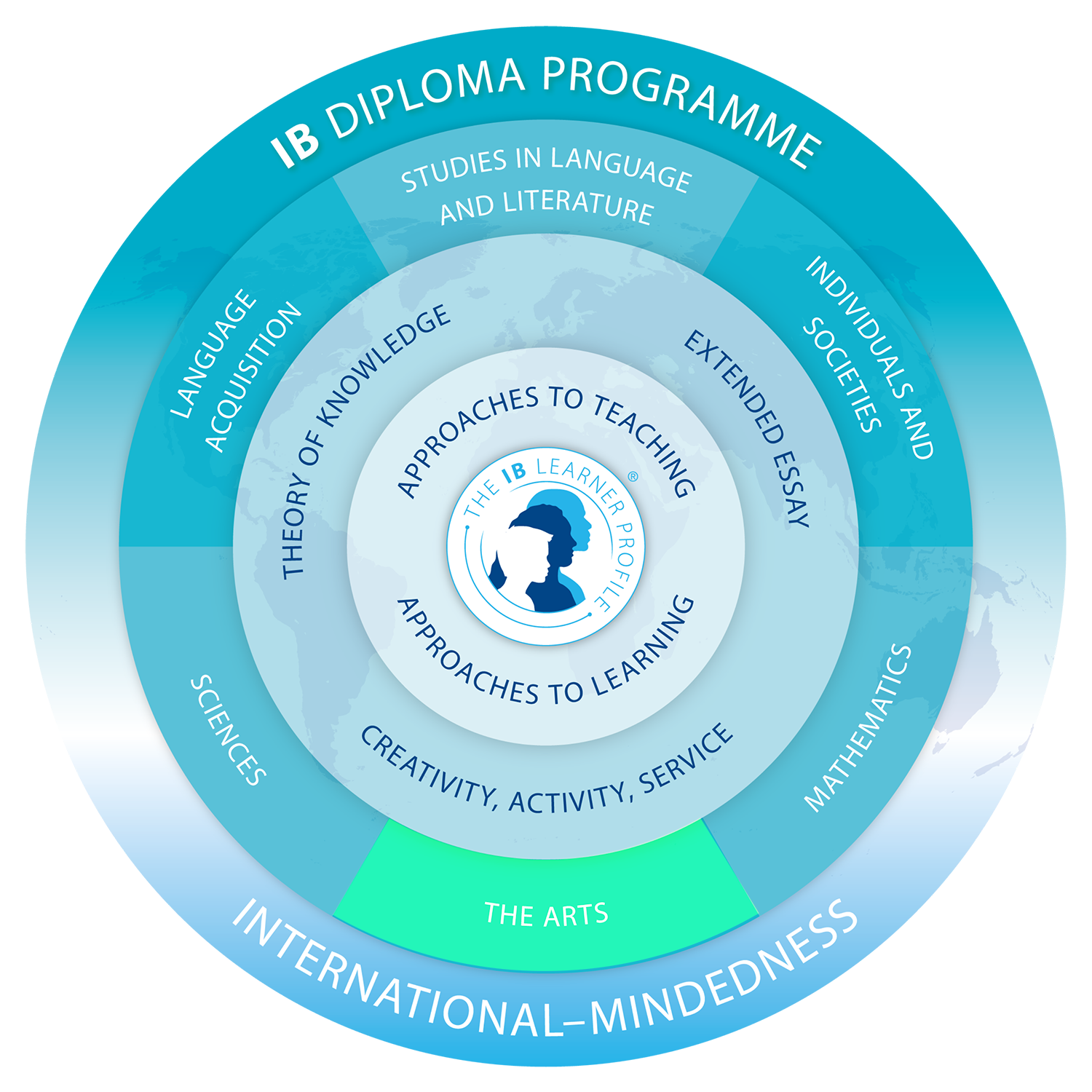
Subjects come from these groups:

  • Language & Literature
  • Language Acquisition
  • Individuals & Societies
  • Sciences
  • Mathematics
  • The Arts or an additional subject from Groups 1–5

What are HL and SL subjects?

  • HL (Higher Level): In-depth study; more hours
  • SL (Standard Level):Balanced, foundational study Students take 3 HL + 3 SL combinations depending on interests and university goals.

What is the purpose of the core: TOK, CAS, and EE?

  • TOK:Develops critical thinking about knowledge and perspectives
  • CAS:Promotes creativity, physical well-being, and community service
  • EE:A 4,000-word independent research paper in any one of the subject taken

These components support personal development and university readiness

How many subjects does a DP student study?

Six subjects + Core (TOK, CAS, EE).

Can a student drop Arts and take another subject?

The IB Diploma Programme (IBDP) subjects are divided into six academic groups, and students must choose one subject from each group: Studies in Language and Literature, Language Acquisition, Individuals and Societies, Sciences, and Mathematics. Students can then choose their sixth subject from the Arts or take a second subject from another group (excluding the Arts).

How is assessment done in the DP?

  • Internally Assessed (IAs) and moderated by IB : Projects, investigations, orals
  • Examined by IB : TOK essay and Extended Essay
  • Examination for Diploma award at the end of DP year 2- Final exams marked by IB examiners

Students earn grades from 1–7 per subject, plus 3 core points from TOK + EE.

How does the DP grading compare to CBSE percentages?

DP grades (1–7) do not convert directly to percentages. Universities use official conversion scales or predicted grades to understand performance. Many rely on IB transcripts directly.

Does DP allow retakes?

Yes.
Students may retake one or more subjects in subsequent exam sessions (May/November).

What are the requirements for receiving the IB Diploma?

Students must:

  • Complete six subjects
  • Score at least 24 points
  • Complete TOK, EE, CAS
  • Not violate academic honesty
  • Meet minimum subject requirements
  • Achieve at least a D in the TOK/EE combination

Is the DP workload heavy?

It is demanding but manageable with:

  • Good time management
  • Support from teachers
  • Balanced HL/SL subject selection
  • Steady, consistent effort

Unlike CBSE, the assessments are spread out, not dependent on a single board exam.

How is homework different from CBSE?

DP homework includes:

  • Research tasks
  • Inquiry-based learning
  • Reflection
  • EE or IA preparation

It does not focus on rote worksheets or repetitive drilling or coaching.

Can CBSE students cope with internal assessments (IAs) and research?

Yes — with guidance.

IAs teach students to:

  • Think independently
  • Conduct experiments/investigations
  • Write academically
  • Reflect on learning

These are skills rarely taught in CBSE but quickly mastered with practice.

Is the IB DP recognized by Indian and international universities?

Yes. All major Indian universities and global institutions accept the IB Diploma. In fact, universities often report that IB students:

  • Adapt more quickly to academic expectations
  • Perform well in research writing
  • Demonstrate independence and maturity

Can IB DP students get admissions in Indian universities like DU, Ashoka, Manipal, Christ, etc.?

Yes. Students must meet subject prerequisites (e.g., Math for commerce/economics; Physics/Chemistry for science courses), but the IB Diploma is fully recognized.

Can IB students apply for universities abroad with predicted grades?

Yes.

Most global universities accept predicted grades for conditional offers.

Does IB DP support career-focused pathways?

Yes — the flexibility of subjects and the research orientation supports fields such as:

  • Engineering
  • Medicine
  • Business
  • Law
  • Humanities
  • Creative arts
  • Social sciences

Can a student from CBSE/ICSE join the IB DP?

Yes. Each IB programme is independent, and students from any board can enter DP after Grade 10.

Will the transition be difficult for a CBSE-background student?

The learning style shifts from memorization to:

  • Inquiry
  • Analysis
  • Research
  • Application
  • Presentation
    CBSE students generally adapt well because of their strong foundational knowledge, with school support.

What support is provided for students transitioning into IB?

Schools typically offer:

  • Bridging courses
  • Research-skill workshops
  • Academic honesty training
  • Study-skills and note-taking strategies
  • Time management and planning support

How are textbooks handled in IB?

IB does not prescribe a single textbook for each subject.
Teachers use:

  • IB-recommended books
  • Research articles
  • Case studies
  • Digital platforms
  • This mirrors university-style learning.

How can parents support their child in the IB DP?

  • Encourage balanced routines
  • Understand deadlines and workloads
  • Talk about stress, deadlines, and CAS commitments
  • Reinforce academic honesty
  • Provide a quiet study space
  • Celebrate small wins

How are students supported emotionally and academically?

The DP emphasizes well-being through:

  • Counsellors
  • Extended Essay supervisors
  • CAS advisors
  • Student support teams
  • Differentiated learning strategies
X