 (1).png)
How Outdoor Learning Can Bring Classroom Concepts to Life
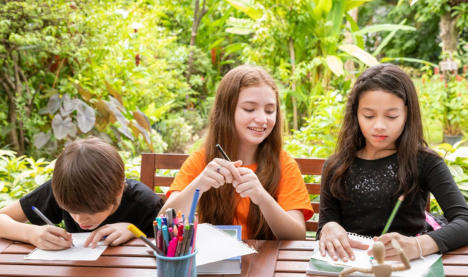
Learning does not always have to happen within four classroom walls. Outdoor environments can give children opportunities to observe, explore and connect what they learn in school with the world around them. From studying plants to understanding measurements, everyday surroundings can become meaningful learning spaces.
For students, outdoor learning makes academic concepts more tangible. Instead of only reading about a topic or seeing it in a textbook, children can experience it through observation and hands-on activities.
Connecting Lessons With Real-World Experiences
Outdoor learning helps children understand how classroom concepts relate to everyday life. A science lesson about plants, for example, becomes more meaningful when students can observe different leaves, flowers, roots and growing conditions directly.
Similarly, mathematics can be connected to outdoor activities through measuring distances, counting objects, comparing sizes or identifying shapes. These experiences help children understand that academic knowledge has practical applications beyond school.
Encouraging Observation and Exploration
Being outdoors naturally encourages children to pay attention to their surroundings. They may notice changes in weather, patterns in nature, insects, sounds, textures or differences between various environments.
Teachers can turn these observations into simple learning activities by asking students to:
-
Record what they notice
-
Compare different objects or environments
-
Ask questions about what they observe
-
Draw or describe their findings
-
Discuss possible explanations
Such activities can make learning more active while encouraging children to become more attentive to the world around them.
Making Different Subjects More Practical
Outdoor learning can support several areas of the curriculum.
|
Subject |
Outdoor Learning Activity |
Learning Benefit |
|
Science |
Observe plants, insects and weather |
Builds understanding through direct observation |
|
Mathematics |
Measure distances, count objects and identify shapes |
Connects numbers with practical situations |
|
Language |
Write observations, stories or descriptions |
Develops vocabulary and communication skills |
This approach can be particularly valuable in international schools in Kerala, where learning often encourages students to connect academic knowledge with real-world experiences.
Building Confidence Through Hands-On Learning
Outdoor activities can also give children opportunities to work independently, make observations and share their findings. Completing a small investigation or presenting something they discovered can help students become more confident in expressing their ideas.
For schools in Kochi, outdoor learning can take place in school gardens, open spaces, playgrounds or nearby natural environments. Even simple activities can create meaningful learning opportunities when students are encouraged to observe and think carefully.
Supporting Learning Beyond the Textbook
The value of outdoor learning is not limited to science or environmental studies. A writing activity can begin with observing a natural setting. A mathematics lesson can involve measuring a playground. An art activity can use natural patterns as inspiration.
This kind of approach can complement the learning experiences offered by international schools in Kochi and IB schools in Kerala, where students are encouraged to make connections between knowledge and their surroundings.
Students in IGCSE schools in Kochi can also benefit from opportunities to apply concepts in practical contexts. Experiencing an idea firsthand can make it easier to understand, remember and use later.
Creating Meaningful Learning Experiences
Outdoor learning does not require elaborate trips or complicated activities. A short observation exercise, a school garden project or a simple measurement task can be enough to make a lesson more engaging.
The goal is to help children see that learning is not restricted to textbooks, worksheets or classrooms. Their surroundings can provide questions to explore, problems to solve and experiences to discuss.
Conclusion
Outdoor learning brings academic concepts closer to everyday life. By giving children opportunities to observe, explore and apply what they learn, schools can make lessons more practical and memorable. When children begin to recognise learning opportunities in the world around them, education becomes an experience that extends well beyond the classroom.